


2026 Hyundai Tucson Hybrid vs. Toyota RAV4 Hybrid: Which Compact SUV Wins?
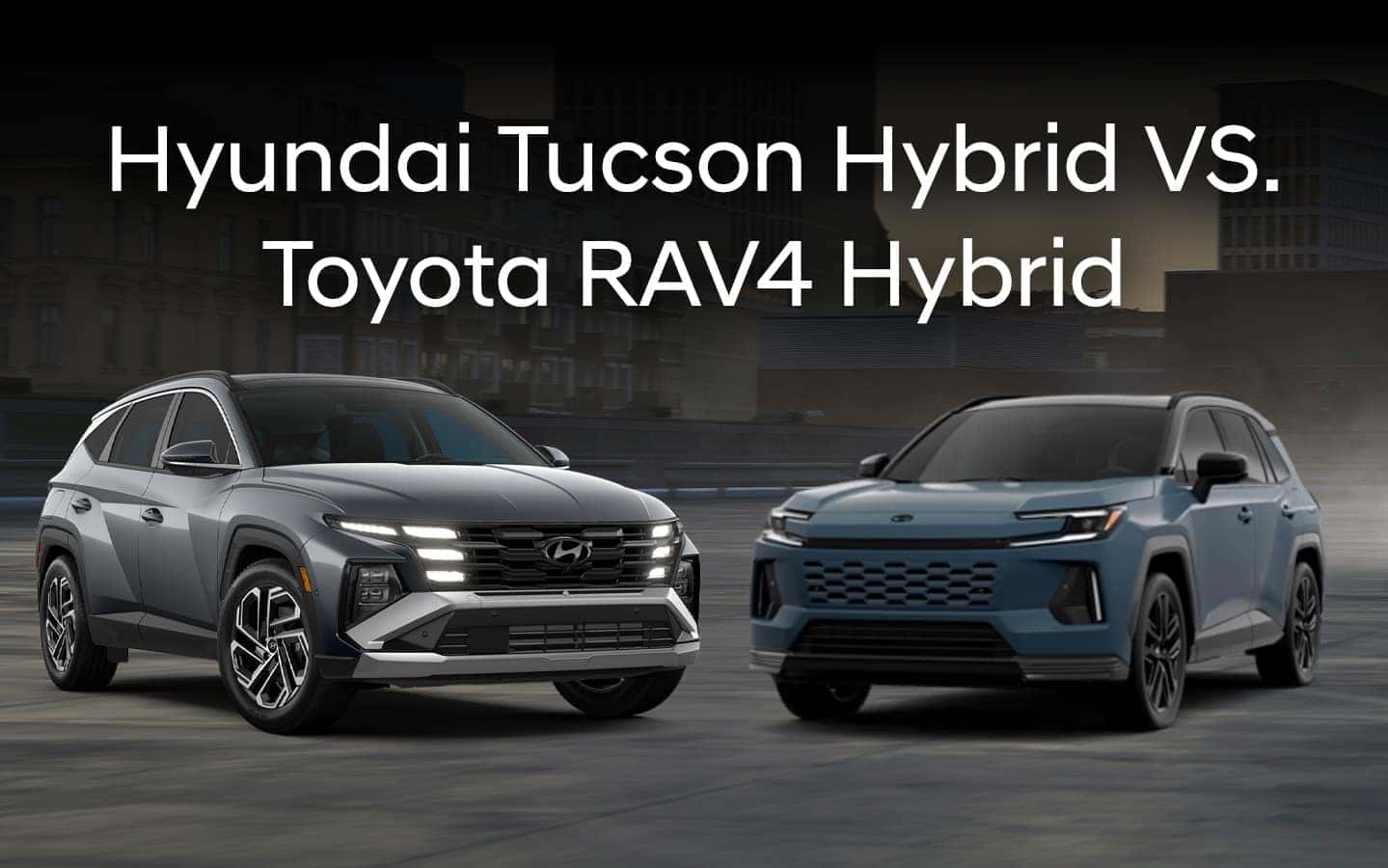
Shopping for a compact hybrid SUV usually comes down to two names: the Hyundai Tucson Hybrid and the Toyota RAV4 Hybrid. Both deliver strong fuel economy, roomy interiors, and a full suite of driver-assist features, but the details — pricing, warranty coverage, and how the hybrid systems actually drive — set them apart. Here’s a real-numbers breakdown to help you decide which one fits your driveway.
Quick Answer
If a longer powertrain warranty, more standard tech, and a lower entry price matter most, the Tucson Hybrid has the edge. If maximum fuel economy and Toyota’s resale reputation top your list, the RAV4 Hybrid is the stronger pick. Below, we break down exactly why.
2026 Tucson Hybrid vs. RAV4 Hybrid: Pricing Comparison
The 2026 Hyundai Tucson Hybrid offers a more affordable starting point, with an MSRP of $34,000, while the 2026 Toyota RAV4 Hybrid starts at $37,000. That gives the Tucson Hybrid an advantage of approximately $3,000 before factoring in destination charges, taxes, or available incentives. For shoppers looking to maximize value, the lower starting price means you can access a well-equipped hybrid SUV while leaving more room in your budget for higher trim levels or optional features. Meanwhile, the RAV4 Hybrid commands a higher entry price, reflecting Toyota’s pricing strategy, but buyers should compare standard equipment and available technology to determine which model delivers the best overall value for their needs.
Fuel Economy: How the Hybrid Systems Compare
Both SUVs are genuinely efficient, but they get there differently.
Tucson Hybrid: EPA-estimated at 38 mpg city/38 mpg highway/38 mpg combined on the entry Blue SE trim, with SEL, SEL Convenience, and Limited trims rated at 36 city/37 highway/36 mpg combined. Every Tucson Hybrid trim comes standard with HTRAC all-wheel drive and pairs a turbocharged 1.6-liter engine and electric motor for a combined 231 horsepower, routed through a traditional 6-speed automatic rather than a CVT.
RAV4 Hybrid: For 2026, Toyota dropped the gas-only engine entirely, so every RAV4 is a hybrid. Front-wheel-drive LE, SE, and XLE Premium trims lead the lineup at an EPA-estimated 47 city/40 highway/43 mpg combined. Add all-wheel drive (standard on the trims Schaumburg Toyota has in stock) and figures step down slightly: 46/39/42 mpg on LE and SE, 45/38/41 mpg on XLE Premium, and 43/37/41 mpg on XSE and Limited. The RAV4 runs a 2.5-liter engine paired with a CVT.
Bottom line: the RAV4 Hybrid posts higher EPA numbers on paper, particularly in FWD trim, but the Tucson Hybrid’s AWD-standard efficiency is closer than the headline numbers suggest, and some independent testing has found the real-world gap between the two even narrower than EPA ratings indicate.
Warranty and Ownership Costs
This is where the Tucson Hybrid pulls ahead decisively. Hyundai backs every Tucson with a 5-year/60,000-mile basic warranty and a 10-year/100,000-mile powertrain warranty. Toyota covers the RAV4 with a 3-year/36,000-mile basic warranty and a 5-year/60,000-mile powertrain warranty — half the coverage Hyundai offers.
Toyota does have one advantage: its hybrid battery warranty runs 10 years/150,000 miles, compared to Hyundai’s 10-year/100,000-mile hybrid battery coverage, and RAV4 buyers get 2 years of complimentary ToyotaCare maintenance, which Hyundai no longer offers for 2026.
| Coverage | Tucson Hybrid | RAV4 Hybrid |
|---|---|---|
| Basic warranty | 5 yrs / 60,000 mi | 3 yrs / 36,000 mi |
| Powertrain warranty | 10 yrs / 100,000 mi | 5 yrs / 60,000 mi |
| Hybrid battery | 10 yrs / 100,000 mi | 10 yrs / 150,000 mi |
| Complimentary maintenance | None for 2026 | 2 yrs / ToyotaCare |
For buyers planning to keep their SUV well past the 60,000-mile mark, the Tucson’s powertrain coverage represents real, long-term financial protection that the RAV4 simply doesn’t match.
Technology and Interior
Every 2026 Tucson Hybrid trim comes standard with a 12.3-inch touchscreen, and stepping up to SEL Convenience or higher adds a matching 12.3-inch digital instrument cluster for a full dual-screen layout. The RAV4 starts with a smaller 10.5-inch touchscreen, reserving its larger 12.9-inch display for XSE and higher trims — meaning RAV4 shoppers pay more to get comparable screen real estate. The RAV4 does introduce Toyota Safety Sense 4.0 for 2026, an updated driver-assist suite with quicker-responding automatic emergency braking and pedestrian detection.
Which One Should You Choose?
Choose the Tucson Hybrid if: you want a lower starting price, standard AWD, more standard technology, and the reassurance of a 10-year powertrain warranty.
Choose the RAV4 Hybrid if: maximum EPA fuel economy is the priority, you want the option of complimentary factory maintenance, or brand resale history matters most to your decision.
Both are excellent compact hybrid SUVs, and either will serve Chicago-area drivers well through stop-and-go traffic and long highway commutes alike. The right call really comes down to whether you weigh upfront savings and warranty coverage more heavily, or lean toward Toyota’s efficiency numbers and maintenance perks.
See Current Patrick Hyundai Inventory
Pricing and available trims change frequently, so the most accurate way to compare is to see what’s on the lot today. Browse current inventory at Patrick Hyundai or schedule a test drive.

0 comment(s) so far on 2026 Hyundai Tucson Hybrid vs. Toyota RAV4 Hybrid: Which Compact SUV Wins?