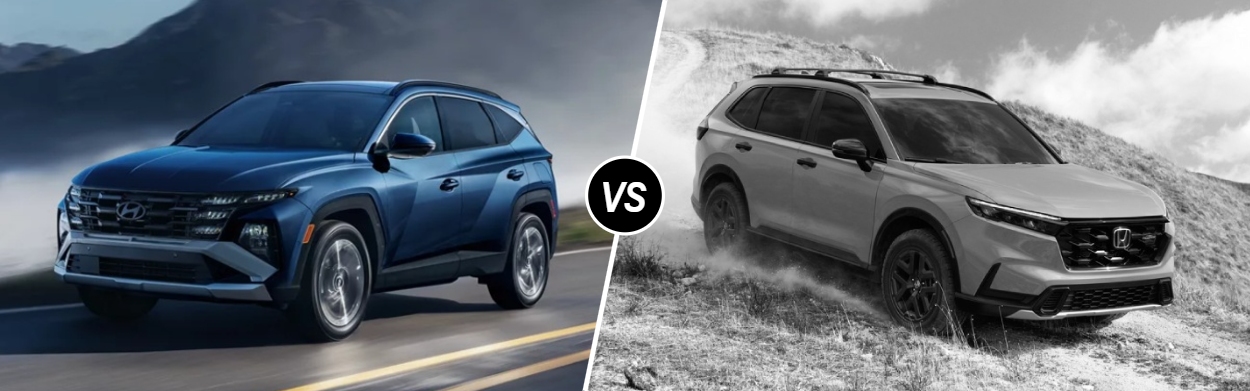
Compact SUVs are built to be all-rounders, and few match the balance of innovation, refinement, and confidence that Hyundai has engineered into its latest model. Set against the perennial favorite from Honda, the 2026 Hyundai TUCSON vs 2026 Honda CR-V comparison highlights meaningful differences you feel every day—behind the wheel, in the tech you use, and in long-term peace of mind. Both offer available all-wheel drive and multiple trims, but Hyundai’s breadth of powertrains, advanced driver-centric features, and industry-leading warranty elevate it as the stronger pick for suburban life and highway treks alike. For commuters and families in Schaumburg, IL who split time between errands, office runs, and weekend getaways, the TUCSON’s thoughtful packaging and future-facing technology help simplify the routine and reduce stress on busy roads. Shoppers from Mount Prospect and Rolling Meadows will also appreciate the cabin’s upscale feel and the way Hyundai’s driver-assist systems support confident driving in tight traffic. At Patrick Hyundai, our team sees buyers respond to the TUCSON’s crisp design, robust feature availability, and standout warranty coverage—key advantages that set it apart when you look closely at everyday usability.
| Feature | 2026 Hyundai TUCSON | 2026 Honda CR-V |
|---|---|---|
| Available All-Wheel Drive (HTRAC AWD) | Yes | Yes |
| Hybrid Powertrain Available | Yes | Yes |
| Plug-in Hybrid (PHEV) Available | Yes | No |
| Panoramic Sunroof Available | Yes | No |
| Surround View Monitor (360-degree camera) | Yes | No |
| Ventilated Front Seats Available | Yes | No |
| Blind-Spot View Monitor (camera feed) | Yes | No |
| Hands-Free Power Liftgate | Yes | Yes |
| 10.25-inch Digital Instrument Cluster | Yes | No |
| 10-Year/100,000-Mile Powertrain Warranty | Yes | No |
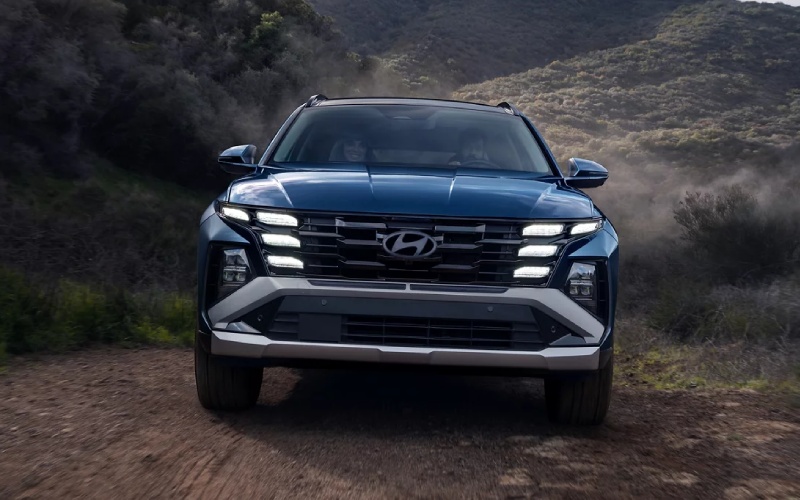
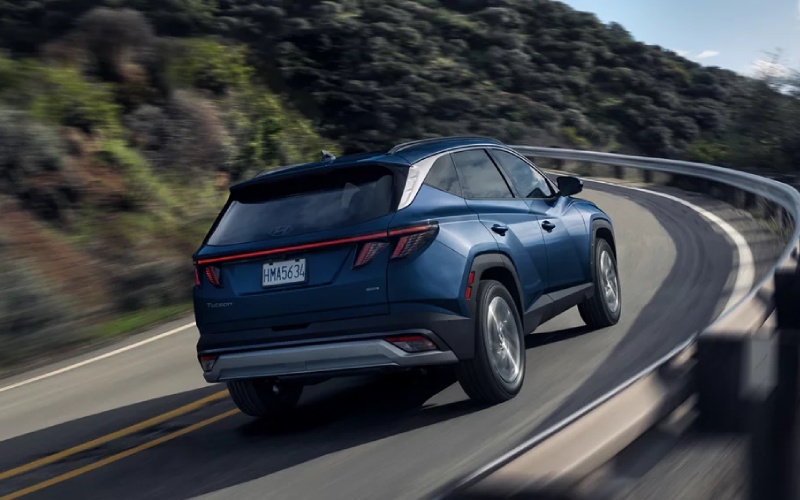
The TUCSON’s exterior design signals purpose and sophistication. Its angular sheet metal, integrated lighting signatures, and crisp character lines convey a planted stance. Available 19-inch alloy wheels and detailed parametric grille work project modernity without shouting, which is ideal for professional curb appeal at work and polished confidence at dinner in town. The hands-free Smart Liftgate with Auto Open is the kind of everyday convenience you only miss when it’s gone—approach with arms full of groceries or project gear and the TUCSON takes care of the rest. The CR-V’s styling is handsome and familiar, with a slightly more traditional SUV silhouette. Honda offers a hands-free power tailgate on select trims and practical roof rail options, yet it stops short of Hyundai’s more dramatic lighting and geometric surfacing that make the TUCSON stand out in traffic and in your driveway. Details like the availability of a panoramic sunroof and the clean integration of cameras for the Surround View Monitor speak to Hyundai’s design-through-usability approach—good-looking touches that also make daily driving simpler.
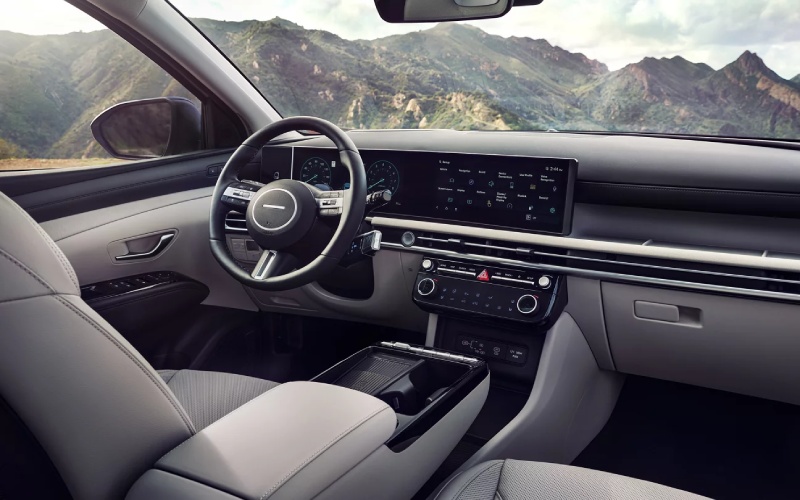
Slip into the TUCSON and the first impression is modern clarity: an available 10.25-inch digital instrument cluster, an expansive central display, and a clean dash layout put essential info within easy reach. Available features like ventilated front seats, heated rear seats, and a panoramic sunroof create a welcoming environment that feels class-above, particularly noticeable during long stints across suburban corridors. The Surround View Monitor is a daily helper, easing parking in shopping centers and tight street spots common around village and neighborhood hubs in Schaumburg, IL. Hyundai’s Bluelink® connected car services add practical convenience with remote start and climate control, door lock/unlock, and destination send-to-car, while available Digital Key functionality lets you share access with family via compatible smartphones. The CR-V counters with a thoughtful layout and strong basics—wireless Apple CarPlay® and Android Auto™ and an available Bose premium audio system on top trims—but it forgoes certain amenities that many shoppers expect in this class, such as ventilated front seats, a panoramic roof, and a 360-degree camera system. The result is a cabin that feels well-made in the Honda, but more customizable and richly equipped in the Hyundai.
Hyundai’s engineering focus in the TUCSON aims for quiet composure and confident responses. The suspension tuning favors a stable, planted ride that remains comfortable over patched concrete and expansion joints common on major connectors and local boulevards. Steering weight builds naturally, delivering easy maneuverability in parking lots and reassuring feedback on the expressway. Available HTRAC All Wheel Drive continuously optimizes grip at each axle, enhancing traction across wet pavement and loose surfaces and supporting sure-footed acceleration from stoplights and on-ramps. The CR-V, for its part, remains a benchmark for predictable, well-rounded road manners. Its Real Time AWD™ helps in low-traction moments and the chassis keeps body motions tidy. Where the TUCSON edges ahead is in the feeling of precision and calm it projects at speed—less wind and road noise, tidy lane tracking with available driver-assist support, and a brake pedal that inspires confidence in stop-and-go conditions. Those qualities matter during multi-stop days, prolonged commute windows, and weekend drives across the region. At Patrick Hyundai, we hear from owners who value how composed the TUCSON feels on irregular surfaces and how effortless it is to place in tight spaces.
Hyundai gives you meaningful choice. The core gasoline engine delivers smooth, linear response through an 8-speed automatic transmission, pairing responsive acceleration with refined cruising. Then there are the electrified options: a Hybrid for drivers who want strong low-end punch with fuel-sipping manners, and a Plug-in Hybrid (PHEV) for those who prefer regular electric driving backed by gas-engine flexibility. That range of powertrains means you can tailor performance and efficiency to your daily rhythm without leaving the TUCSON lineup. The CR-V counters with two approaches—a turbocharged 1.5-liter engine and an available hybrid system on multiple trims—both efficient and easy to live with, paired to a CVT for smoothness. However, Honda does not offer a plug-in hybrid variant in this model, which is a notable advantage for Hyundai if you want quiet, near-instant EV torque and the ability to complete many shorter trips on electric power. Whether you are running errands, taking the cross-town loop, or planning a longer family drive, Hyundai’s powertrain breadth makes it simpler to match the SUV to your driving style now and in the future.
Driver assistance and safety tech are central strengths for both SUVs, but Hyundai layers in extra visibility and useful automation. The TUCSON’s Hyundai SmartSense suite includes features such as Forward Collision-Avoidance Assist, Blind-Spot Collision-Avoidance Assist, Lane Keeping Assist, and available Highway Driving Assist that works with Smart Cruise Control to help center the vehicle in its lane and manage following distance. Blind-Spot View Monitor projects a camera feed in the cluster when you signal, and the Surround View Monitor helps you see curbs and obstacles while parking—tools that make daily driving calmer on busy arterials and narrow neighborhood streets in Schaumburg, IL. The CR-V comes standard with Honda Sensing®, which includes Collision Mitigation Braking System, Road Departure Mitigation, Lane Keeping Assist System, and Adaptive Cruise Control. It’s a robust suite and one reason buyers have long trusted the CR-V. Still, Hyundai’s camera-based blind-spot view and 360-degree camera system deliver more context at key moments, sharpening awareness when you merge, parallel park, or back out of angled stalls. Add Hyundai’s Safe Exit features and rear cross-traffic mitigation availability, and you have a safety net built for the realities of modern traffic.
For many local shoppers, the difference comes down to thoughtful details and long-term confidence. Hyundai’s interior technology and driver-assist visibility tools reduce friction in daily life, while the breadth of powertrains and available HTRAC All Wheel Drive make it easy to tailor performance. Our industry-leading Powertrain Limited Warranty further underscores Hyundai’s commitment to ownership peace of mind. Shoppers comparing 2026 Hyundai TUCSON vs 2026 Honda CR-V will find both are strong—yet Hyundai consistently offers more of the features drivers request most.
Visit Patrick Hyundai to see and feel the difference for yourself; our team will help you select the configuration that best fits your routine in Schaumburg, IL.
When you line up the 2026 Hyundai TUCSON vs 2026 Honda CR-V, both prove why compact SUVs remain the smart choice for households juggling work, after-school schedules, and weekend plans. The distinction is clearest in areas that matter every day: the TUCSON’s available Surround View Monitor and Blind-Spot View Monitor for heightened awareness, the option to go Plug-in Hybrid within the same model family, and the quiet polish to its ride and cabin. Then there is the assurance of America’s Best Warranty backing your investment for years to come. If your drive takes you from neighborhood streets to major connectors, and your needs span comfort, versatility, and confidence, our recommendation is straightforward—choose the Hyundai. We are ready at Patrick Hyundai to walk you through trims and features and help you find the right fit. Whether you live nearby or you are coming from a surrounding suburb, you will find our team prepared, our approach transparent, and our inventory tailored to how people actually drive and live here.